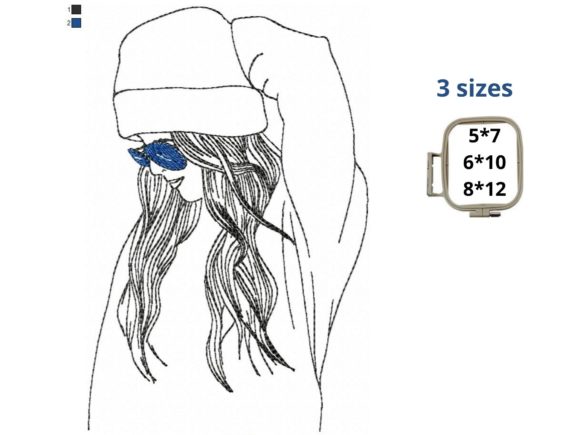
Girl with Glasses Embroidery Design: A Designer’s Review
When I first opened the Girl with Glasses machine embroidery design file, I had a very specific project in mind. A regular client had asked for a custom tote bag that felt fresh, modern, and a little bit different from the usual floral or monogram approach. This design immediately reminded me of the kind of softly stylized portrait you might find in contemporary illustration. The subject’s glasses add instant personality, and the overall mood feels both youthful and versatile. For anyone working with youth clothes or accessories, that’s exactly the kind of visual you want—recognizable, trendy, and easy to integrate into a range of products.
As a designer who spends far too many hours testing embroidery files, I don’t get excited about every single motif. But this one made me pause because it solves a real problem. There are plenty of cute embroidery designs out there, but surprisingly few that feel specifically tailored to the modern pre-teen and teenage market. The Girl with Glasses doesn’t lean into babyish territory, and it avoids overly complex shading that can turn muddy on textured fabrics. Instead, it relies on clean lines and a balanced composition that whispers “cool” without screaming for attention. That balance is what often turns a simple tote bag design into something that actually sells.
First Impressions on the Hoop
Before stitching a single thread, I always open the embroidery file and scroll through the color stops and stitch sequence. With this design, the structure suggested a thoughtful mix of satin stitch for the eyeglass frames and subtle facial contours, while the hair area called for smooth fill stitch blocks. There were also delicate running stitch details around the eyes and the bridge of the nose. This combination usually means the design will read clearly across different fabric textures—provided you don’t overload a small hoop size.
For my test stitch-out, I chose a medium-weight cotton canvas tote bag. I hooped a firm cut-away stabilizer because I wanted the finished product to hold its shape after dozens of trips to the farmer’s market. The machine embroidery design stitched out in under fifteen minutes, and the result genuinely impressed me. The glasses came through crisp and distinct, with no thread breaks or awkward jumps. I did notice that the smallest pupil details required a clean machine and a recent needle change—thin satin stitching at that scale can look blurry on a dull needle. So if you’re planning to produce a batch of custom apparel, take ten minutes to swap out your needle. It makes a visible difference.
Where the Girl with Glasses Truly Belongs
The theme of this design naturally points toward youth-oriented projects, but you’re not limited to t-shirts alone. After my initial test, I found myself brainstorming at least a dozen product categories where the Girl with Glasses would feel completely at home. A short list that I actually sketched out includes:
- Tote bag design: The portrait fits beautifully on the front panel and gives a boutique look that appeals to teens and college students.
- Sweatshirt embroidery: Centered on a crewneck, it creates a cozy, personalized gift that feels like a small-batch clothing brand.
- Baby embroidery: If you scale it down and soften the thread colors, this design can work wonderfully on onesies or nursery decor for bookish families.
- Embroidered patch: Stitch it on felt or twill, remove the background, and you have a trendy patch for backpacks or denim jackets.
- Holiday embroidery projects: The design takes on a different life when stitched on a flour-sack tea towel as part of a gift set, or on a pillow cover for a reading nook.
- Commercial embroidery for small shops: If you run an Etsy store or sell at craft fairs, this motif instantly amplifies a basic blank into a finished product that tells a story.
For custom apparel specifically, I’d lean toward unisex cut tees and hoodies in neutral tones. The design’s modern feel shows best against oatmeal, soft grey, or dusty rose backgrounds. Dark fabric can work too, but you’ll need to test thread color contrast carefully—more on that in a moment.
When Project Choices Need a Little More Caution
Not every embroidery design is a universal plug-and-play element, and the Girl with Glasses is no exception. Based on my test runs, here are the situations where you should pause and plan:
- Very small hoop sizes: If you try to cram this design into a 4x4 zone, the facial details may lose definition. I haven’t tested the absolute minimum hoop size for this file, so confirm that with the design seller before you commit.
- Thin or stretchy fabrics: A lightweight jersey t-shirt is doable, but you’ll need a no-show stabilizer and possibly a basting spray to prevent shifting. Without proper support, the satin stitch outlines can pull the fabric and warp the expression.
- Curved surfaces like caps: Flattening the design perfectly on a structured cap is tricky because the portrait’s vertical orientation doesn’t naturally follow the cap’s curve. It’s not impossible, but I’d rate it as an advanced placement.
- Heavily textured fabrics: Towels and thick fleece can swallow the fine running stitch details around the glasses. If a holiday towel set is your goal, consider floating a layer of wash-away topping to keep the stitches on the surface.
- Frequent washing requirements: On a kitchen apron or a child’s daily-use item, the long satin stitch runs might eventually snag. A careful stitch density check beforehand will tell you if you need to reinforce with a lighter underlay.
What This Design Actually Adds to Your Business
As a small business owner, you’re not just stitching thread—you’re stitching perceived value. The Girl with Glasses design does something that plain text or generic icons can’t. It gives the finished product a recognizable character. When I showed the test tote to three different friends (none of whom embroider), each one immediately said they could picture it in a locally-owned bookstore or a handmade shop. That’s the kind of customer trust signal you can’t fake. The design reads as a thoughtful choice, not a last-minute add-on.
For brand consistency, this motif could become a signature element. If you sell tote bags, pillows, and sweatshirts, a recurring Girl with Glasses theme creates a mini-collection. Buyers who recognize a previous product often return because they want the matching piece. As a personalized gift, it also opens up conversations: you can embroider it on a journal cover, a reading pillow, or even a baby blanket for a parent who loves literature. The glasses alone communicate “reader,” “thinker,” “creative”—associations that attach emotionally to your merchandise and raise its giftability.
Practical Embroidery Designer Notes Before You Stitch for Sale
This section is the honest, unglamorous part of reviewing any digital embroidery file. Because as much as we love a beautiful test-out, the real world demands consistency. If you plan to use Girl with Glasses for commercial embroidery or in your craft business, run through this checklist first:
- Always test on the exact fabric and stabilizer combo you’ll sell. A mockup on quilting cotton won’t guarantee success on a ribbed sweatshirt. The fabric texture shifts how the fill stitch lays down.
- Examine stitch density in your software. If the satin stitch columns are too dense for your thread weight, you could get puckering. If they’re too loose, the base fabric will peek through.
- Check the thread color palette against both light and dark backgrounds. I printed a black-and-white version of the design preview and realized the skin tone thread nearly disappeared on a cream tote. A tiny contrast adjustment fixed it.
- Inspect small details at actual size. Zoom in on the glasses bridge and the eye outlines. If those details measure less than one millimeter in width, they might not register cleanly on a napped fabric.
- Confirm the design’s final hoop size requirements. I can’t stress this enough—verify the dimensions before buying. A design that looks generous on screen might require a mid-size hoop you don’t yet own.
- Check the license. Some digital embroidery file sellers allow finished products to be sold freely; others restrict commercial use or the number of items you can produce. Don’t assume—read the terms. This protects both your Etsy seller shop and your long-term peace of mind.
- Create a printable mockup for your listings. If you take a clear photo of the stitched sample on a neutral background, you can build a simple design assets library to pre-sell custom orders before you ever thread the needle again. Customers love seeing a real embroidered result, not just a digital preview.
Is It Worth Adding to Your Embroidery Library?
From a purely practical angle, the Girl with Glasses machine embroidery design earns its place for anyone who regularly creates youth-focused custom apparel, accessories, or personalized gifts. It’s modern, it has personality, and it stitches cleanly when you treat the setup with the respect any detailed embroidery project demands. For craft business owners who sell on Etsy or at weekend markets, this design can elevate a plain blank into a boutique product. The design doesn’t require advanced editing, and it plays nicely with a wide range of thread color substitutions.
I’ll be honest: I’d love to see more motifs in this style from the same creator. A companion collection with books or coffee mugs would be a natural extension. For now, this stand-alone Girl with Glasses fills a gap that many embroidery design collections overlook. It’s not loud or overly trendy. It’s quietly confident—just like the girl it portrays.