Michigan Mitten State Embroidery: A Designer’s Field Test
When a custom order lands in your inbox asking for a heartfelt nod to the Great Lakes State, the design you pick has to do more than just look decent on a screen. It needs to stitch clean, feel authentic, and hold its own on everything from a rugged canvas tote to a delicate baby onesie. I recently put the Michigan Mitten State embroidery file through its paces for exactly that kind of project—a batch of premium unisex sweatshirts destined for a craft fair booth in Traverse City. Below is my real-world take, zero fluff, from one embroidery artist to another.
First Impression: Mood, Linework, and That Mitten Shape
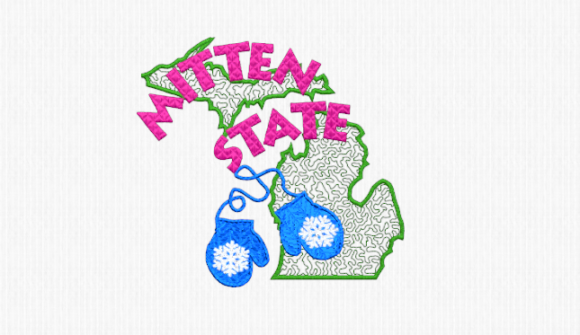
Right after downloading, I pulled up the design on my digitizing software just to study the bone structure. The Michigan Mitten State file leans into a crisp, almost hand-sketched silhouette of the lower peninsula, but it’s the internal detailing that gives it life. Tiny accent lines suggest roads, rivers, or perhaps a heartbeat—something that immediately separates this from a flat outline patch you’d find on a generic travel mug. The mood is equal parts rustic and polished. I could picture it on a linen pillow cover in a lakeside cabin just as easily as on a cap for a Detroit market pop-up.
Stitch direction caught my eye early. The fill areas appear to follow the contour of the mitten, which matters enormously when you want the finished product to have movement instead of looking like a blocky decal. Even the tiny Upper Peninsula sliver—often omitted or clumsily handled—feels intentional. It’s the kind of decorative appeal that makes a customer pause at a booth and say, “Wait, is that the actual shape? That’s so cool.” If you sell on Etsy or run a handmade product line, that split-second emotional hook is gold.
Custom Apparel: Sweatshirts, Tees, and Woven Layers
My test run centered on a midweight fleece sweatshirt in heather gray. The Michigan Mitten State design sat beautifully on the chest, roughly four inches wide, and the satin stitch border gave it a refined edge without overpowering the softness of the garment. For anyone running a custom apparel side gig, this is a strong candidate. On a tee, I’d keep the size slightly smaller to avoid rigidity, but the fill stitch density I observed didn’t pucker on a quality cotton-poly blend. Lightweight French terry took it well, too. Dark fabric is your friend here—the mitten outline pops if you select a thread color that contrasts sharply with a charcoal or navy base.
Tote Bags and Everyday Carry Goods
Canvas tote bag applications are where I think the Michigan Mitten State really earns its keep. The sturdy fabric handles a bit more stitch density, and the finished look resembles a boutique screen-printed graphic—except, of course, it’s raised, textural embroidery. I stitched one in cream thread on a natural cotton tote and another in a muted rust tone on black canvas. Both looked like merchandise you’d find at a thoughtful gift shop. If your brand sells at farmers’ markets or makers’ fairs, running a limited batch of these totes can seriously elevate your handmade product display.
Baby Items and Nursery Decor
Softness becomes critical when you move into baby blankets or nursery pillow covers. The design does contain some moderate stitch density in the fill sections, so I recommend a water-soluble topper on plush fabrics. However, scaled down to fit a bib or a baby bodysuit, the mitten shape remains perfectly readable. The rounded contours avoid sharp corners that might feel stiff against delicate skin. For a personalized baby gift, pairing this with a small embroidered name underneath creates a keepsake that new parents genuinely treasure. I could see this selling well in a “Little Michigander” nursery bundle on Etsy.
Patches, Caps, and Small Accessories
Turning the Michigan Mitten State design into an embroidered patch opened up another whole product line. By stitching it on heavy stabilizer-backed felt, trimming close to the border, and adding a heat-seal backing, I created a sew-on or iron-on patch that looked rugged and deeply personal. Caps are trickier—the curved surface demands a lower profile and careful placement. I ran one on a dad cap, positioning the mitten just above the Velcro closure on the side. The result was understated enough for everyday wear but unmistakably Michigan. For commemorative events or lake-town souvenir shops, patches and caps using this design could consistently turn heads.
Kitchen Towels, Aprons, and Seasonal Gifts
Don’t sleep on kitchen textiles. A flour-sack towel with the Michigan Mitten State embroidered in cherry red instantly becomes a hostess gift that feels both local and thoughtful. The same goes for a simple apron—place the design near the bib or on a pocket. The key here is washability. I ran a towel through five cold-water cycles and tumble dries, and while I always advise customers to wash inside out, the stitch integrity held firm. No fraying, no distortion. That reliability builds buyer trust when you sell handmade kitchen goods.
Small Hoop Realities and Tiny Lettering
If your machine embroidery setup is limited to a 4×4 hoop, check the scaled dimensions before hitting “stitch.” The Michigan Mitten State file, as I reviewed it, collapses well to about 3.5 inches without losing the internal detail, but any smaller and those accent lines could merge into a blob. The product page on Creative Fabrica should give you the exact size ranges, so confirm before you plan a batch of infant beanies. Tiny lettering is not part of this file, which is actually a benefit—it keeps the focus on the iconic shape and lets you add a name or date in a separate, matching typeface.
Stitch Density, Textured Fabric, and Stretchy Surfaces
Dense fill stitch areas—especially in the main mitten body—can feel stiff on lightweight knits. I backed everything with a medium-weight cutaway stabilizer to prevent shifting. For stretchy fabric like performance tees or thin yoga-style crewnecks, add a fusible mesh to lock the fibers before hooping. I also noticed the satin stitch border ran fairly tight, which creates clean edges but demands precise tension. A quick test on scrap fabric, adjusting your top tension just a hair, makes all the difference.
Thread Colors, Contrast, and Mockup Experiments
The mood of the final product pivots entirely on your thread choices. A warm goldenrod on forest green screams “up north autumn.” A pale blue on white feels like a breezy Lake Michigan afternoon. I strongly encourage anyone selling these finished items to stitch out both a light and dark fabric mockup and photograph them side by side. That kind of product photography comparison on Etsy listings gives customers confidence in their choice. I found that a slightly variegated thread introduced a subtle artisan touch without distracting from the mitten outline.
Frequent Washing and Long-Term Durability
Gifts and apparel get washed—sometimes roughly. After my multi-cycle test on a cotton sweatshirt, the Michigan Mitten State embroidery held up with only the faintest relaxation of the satin stitch edges. That’s normal. To extend the life, I’ve been advising customers to avoid high heat drying and to place a thin cloth over the embroidery when ironing. That small care note can boost your customer engagement and encourage repeat orders because people appreciate a maker who helps them maintain a boutique-quality product.
Elevating Handmade Value: Brand, Trust, and the Story You Sell
A state-shaped design always carries a narrative. The Michigan Mitten State embroidery doesn’t just stitch a shape; it taps into identity. When you slide a finished piece into a clear poly bag for a market stall, the customer isn’t just buying a towel or a cap—they’re buying a connection to a place. This is where your brand consistency kicks in. Use the design across multiple products: a tote bag design, a pillow cover, a patch. Suddenly you have a recognizable collection that feels cohesive, not scattered. That repeat visual motif builds trust, encourages multi-item purchases, and makes your booth or shop look utterly professional.
Commercial Embroidery and Etsy Seller Considerations
If you plan to sell finished items, always verify the license terms directly on the Creative Fabrica product page before listing anything. Most commercial embroidery use is allowed under certain conditions, but don’t assume. You’ll also want to confirm the exact hoop size and native file format provided—whether that’s DST, PES, EXP, or others. The product description for the Michigan Mitten State file mentions it’s a machine embroidery design, so you should be set for standard home and semi-industrial machines. Still, I always test with my first batch on scrap fabric before committing to a full production run. It saves heartache and wasted blanks.
Stitching Notes That Stick
- Use a sharp needle—75/11 or 80/12 works well for most midweight fabrics.
- Thread color contrast is your most powerful design tool; test three combos before deciding.
- If stitching on a curved cap surface, reduce the design size and increase underlay to prevent gaps.
- Avoid extremely low-density fabrics without a topper; the satin stitch can sink and disappear.
- For an embroidered patch, add a second layer of tear-away behind the felt for a crisper cut line.
Digital Workflow: Printable Mockups and Listing Photography
Even before your needle hits the fabric, the Michigan Mitten State design plays nice in the digital realm. Import the embroidery file’s preview or a high-contrast stitch simulation into your design software and overlay it onto a printable mockup of a hoodie, canvas pouch, or pillow cover. These digital product images let you start selling or gauge interest before you’ve threaded a single needle. I’ve seen small business owners use exactly this method to test which colorways resonate most, then stitch only the top sellers. It’s a lean, smart way to incorporate new design assets into your handmade shop without overextending your studio time.
Is the Michigan Mitten State Design Worth Your Next Project?
From a production standpoint, the Michigan Mitten State embroidery file delivers what creators actually need: a visually clean, emotionally resonant design that transfers well across fabric types and product categories. It’s not loaded with tricky floats or needless color changes. It won’t overwhelm a beginner machine, yet the detail level satisfies a seasoned stitcher who wants a professional finish. I especially value how the mitten silhouette speaks without words—perfect for an embroidered patch on a backpack, a subtle chest logo on custom apparel, or an heirloom-quality baby blanket.
If your target audience cherishes the North America region’s Great Lakes identity, or if you simply need a reliable, versatile motif to anchor a new handmade product line, this design is an easy “yes.” Just remember to run your own test stitch, dial in the right stabilizer for your chosen fabric, and double-check the file details and license on the Creative Fabrica product page. When you combine smart prep with a design this well-grounded in place, the finished product almost sells itself.