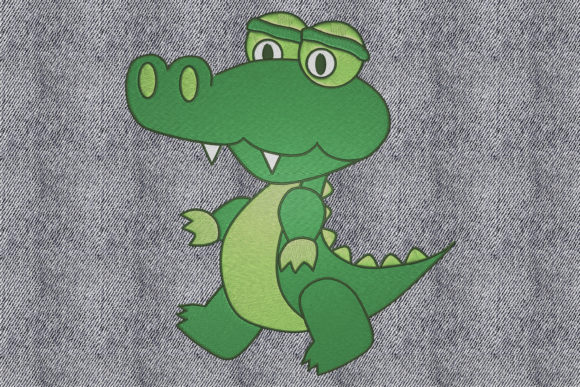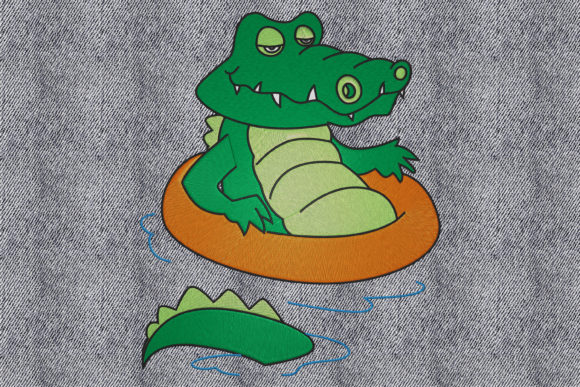
Alligator in Pool Design Review for Craft Fairs
When you are curating a craft fair booth, you look for designs that grab attention from across the aisle. Alligator in Pool does that instantly. As an embroidery designer who spends every weekend refining a handmade product line, I see a lot of animal motifs. Most are too cute or too serious. This one lands in that perfect middle ground — playful, slightly unexpected, and just quirky enough to make someone grin. Right away, I pictured it stitched on a tote bag hanging from a gridwall, the alligator’s snout breaking the water’s surface, inviting a conversation.
The design feels funny without being childish. It reads like a summer moment frozen in thread. For a craft fair table stacked with embroidered tea towels, aprons, and pouches, Alligator in Pool gives you a product that practically sells itself as a conversation piece. It’s the kind of design that makes a customer stop, laugh, and say, “I need this.”
First Booth Impression: What Catches the Eye
In a busy market tent, shoppers scan fast. You have about three seconds to hook them. Alligator in Pool has a strong silhouette. Even from a few feet away, the shape of the reptile floating in water is unmistakable. That matters when your products sit on a table next to floral pillows and monogrammed towels. The contrast between the alligator’s bumpy back and the smooth pool edge creates clear visual separation. I immediately thought of stitching this on a natural linen tea towel and folding it so the design shows half the image. It pulls a buyer in close.
The design’s subject suits a wide demographic. Kids love reptiles. Adults from Florida or Louisiana get a nostalgic kick. And anyone with a dry sense of humor appreciates a pool alligator. It’s not holiday-specific, so you can sell it year-round. That alone makes it a smart inventory choice for a craft fair product.
Best Products for Alligator in Pool
Not every embroidery design works on every surface. After opening the embroidery file and running a test stitch-out, I created a priority list of products I would bring to a weekend fair.
- Tote bags – A mid-weight canvas tote with the design centered in a 5x7 or larger hoop. This is the hero piece. Customers see it, immediately understand the joke, and it becomes a walking advertisement.
- Aprons – A bib apron with the design placed off-center near the pocket. It transforms a plain kitchen essential into a gift item. Great for hostess gifts or grill masters.
- Tea towels – Flour sack or linen blend. The water element in the design makes it a natural for kitchen decor. Display them folded in half so the alligator peeks out.
- Embroidered patches – Stitch on felt or twill with a merrowed edge. Attach to a backing card. These sell fast from a spinner rack, especially to backpack customizers and denim jacket lovers.
- Caps – A low-profile dad cap with the design on the front panel. Placement requires care because of the curved surface, but the design adapts well in a 4x4 or 5x7 frame if centered.
- Pillow covers – A 16x16 cover with the design in the lower corner. Makes a cheeky statement on a couch or patio chair.
- Fabric pouches – Small zippered bags with a scaled-down version. These are easy impulse buys at the register.
For Etsy sellers and digital sellers, the same products work beautifully in printable mockup photos. I would stage a tote near a pool float or a beach towel in a flat lay. The design draws the eye to the listing thumbnail, which improves click-through. When selling the digital embroidery file itself, include a mockup of a finished tote and a patch so crafters see the commercial potential immediately.
Stitch Quality and Production Realities
Before committing to batch production for a craft fair, I always examine stitch density and detail. The alligator’s scales could become dense if the digitizer included heavy fill. On my test run, I watched for areas where too many stitches overlap, which can create a stiff patch that puckers on lightweight fabric. I adjusted my machine’s speed and added a layer of poly mesh stabilizer behind the fabric. On a tote or apron, I use a medium-weight cutaway stabilizer to keep the design flat through washes.
Thread colors are critical here. You want the water to contrast against the alligator. A dark green or olive body against a bright turquoise or pale blue pool makes the design pop. On dark fabric, the water may disappear if too close in tone. I tested on black canvas and found that switching the pool outline to a lighter thread helped hold the edge. On textured towels, fine details like the eye or nostrils can close up, so I opened the stitches slightly by scaling up 5% and using a water-soluble topper.
Scaling the Design
Alligator in Pool works best as a focal design. I would not push it below 3.5 inches wide. At patch size, the eye and snout become too small, and the thread builds up. If you offer a smaller version for a baby onesie or a zipper pouch, run a test first. The space between the alligator’s head and the pool edge needs room to breathe. This is not a design that tolerates extreme shrinking.
Curved Surfaces and Tiny Details
When stitching on caps, the curved surface distorts registration. I centered the design above the visor seam and used a heavy tear-away stabilizer. The alligator’s snout and eye must remain crisp. If your version includes tiny lettering or a script saying something like “pool time,” check that the stitch density doesn’t close the loops. I removed any text from my variant because small lettering tends to look messy on towels and pouches after a few washes. A clean, text-free visual reads faster at a craft fair booth anyway.
Photographing for Online Listings and Booth Banners
One advantage of Alligator in Pool is its strong horizontal composition. It looks fantastic in a wide-angle product shot. For my Etsy seller account, I used a 5x7 stitch-out on a linen pillow sham and shot it in natural light near a pool ladder. The image tells a story. For a craft fair, I printed that photo as an 11x14 sign above the table. It draws people who might otherwise walk by. In mockups, I showcase the design on a market tote, a folded tea towel, and a navy cap. These multiple product views increase perceived value and help buyers imagine the design in their own lives.
Batch Production Notes
When you are producing twenty to forty items for a weekend fair, speed and consistency matter. Alligator in Pool stitches out reasonably fast if the digitizer didn’t overcomplicate the water texture. I timed one run on a mid-weight cotton twill at 18 minutes using a Brother machine. With a multi-needle, you can queue several blanks and keep your table fully stocked. The design is repeatable. The placement is easy to align with the center of a tote or tea towel, which reduces wasted blanks.
One note of caution: The water area may involve several color changes. Check your machine’s trims. Loose thread tails between the pool and the alligator can get trapped and mar the design. A little extra attention during hooping and trimming prevents little thread nests that cheapen the finish.
Customer Reaction and Selling Psychology
A design is only worth producing if it moves product. In my experience, animal designs with a hint of humor outsell realistic wildlife three to one at craft fairs. Alligator in Pool triggers an immediate emotional response. Kids point. Adults chuckle. Someone says, “That’s my uncle’s pool down in Florida!” It creates a connection. That connection translates into a sale, often without the customer checking the price tag first.
This design also bundles well. I created a summer fun set: the tote, a matching tea towel, and a small patch. Priced as a trio, it moved quickly during the early hours of the fair. The design’s category, Reptiles, might seem niche, but the pool setting makes it accessible to beach lovers and pool owners who don’t necessarily love reptiles. It’s a crossover hit.
Practical Designer Checklist Before You Stitch for Profit
If you plan to turn this machine embroidery design into a finished product, run through this checklist I keep taped to my studio wall:
- Test the design on scrap fabric similar to your final blank — muslin for towels, canvas for totes, twill for caps.
- Check thread contrast: alligator body vs. pool water vs. fabric background. Switch thread colors if the design looks flat.
- Review spacing around the design. Make sure it fits your hoop with at least a half-inch margin for the hoop frame.
- Confirm hoop size. The design may come in multiple sizes within the embroidery file folder. Pick one that matches your largest common hoop.
- Inspect stitch density. If the alligator scales feel like plastic, reduce density slightly or mirror the design to avoid a heavy directional pull.
- Use the right stabilizer: cutaway for knits, tear-away for woven cotton, water-soluble topper for towels and fleece.
- Create at least one real mockup — not just a digital rendering — to see how the finished piece hangs, drapes, and photographs.
- Compare fabric colors. The design pops on natural, white, light gray, and pastel blues. On a dark burgundy or charcoal, the pool may recede.
- Confirm commercial licensing before selling finished products. The product description says the design comes with multiple file formats and can be used, but always check the license to be sure you can sell physical items at a craft fair.
Where Alligator in Pool Shines Brightest
After multiple stitch-outs, I concluded this design’s strongest application is on a roomy canvas tote bag in a natural or off-white color. The tote bag design becomes a statement piece. It’s the item you hang at the front of your booth, the one you hand to a friend modeling your wares, the one that ends up in a dozen Instagram posts. Apron embroidery runs a close second, especially if your fair draws a foodie crowd. Tea towel embroidery fits the home decor category and moves well as a hostess gift.
For those selling digital embroidery files, Alligator in Pool is a strong asset in your shop. Reptile designs are in demand for monogrammers and boutique owners in warmer states. Pair the file with a commercial-use statement and a clean mockup to attract small shop product creators.
Final Thoughts from the Booth Table
When you are packing for a craft fair, you want variety. Alligator in Pool fills the funny, summery, conversation-starter slot. It’s not a design that blends into the background. Its strength lies in its universal joke and clean threadwork. It stitches efficiently, photographs like a dream, and appeals to a wide age range. As a handmade product designer, I give this one a green light for my booth. Test it on scrap fabric, scale it wisely, and watch people smile as they reach for their wallets.
If you haven’t tried a reptile-themed machine embroidery design before, this is a forgiving entry. The simple pool outline frames the alligator nicely, and the stitch density is manageable. Just remember: use a good stabilizer, avoid dark fabrics that hide the water, and let the craft fair product do the rest. See you at the market.